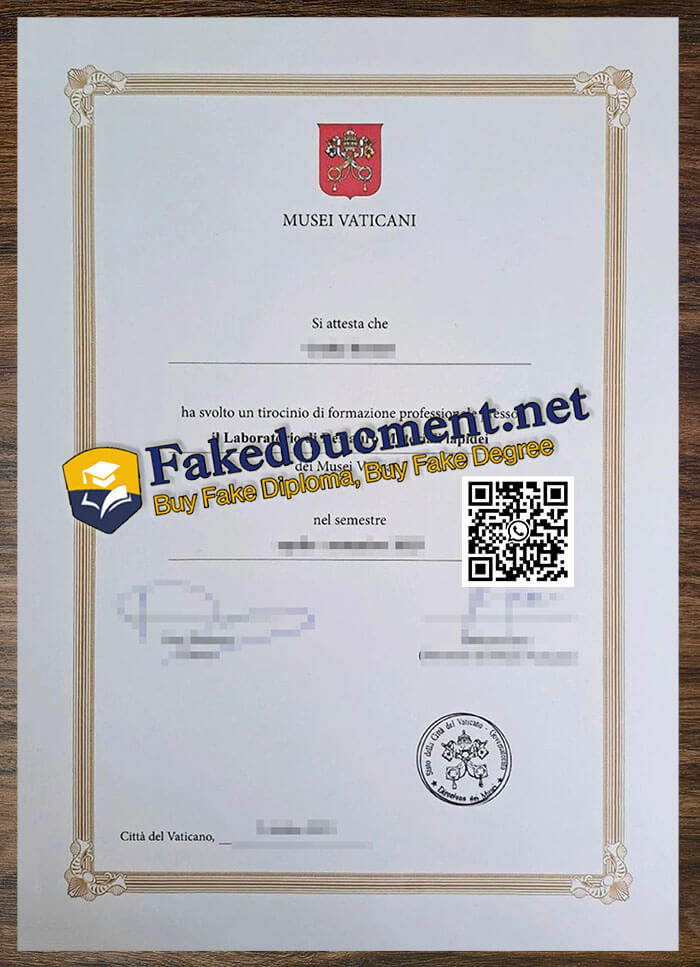
Where to order a realistic Musei Vaticani certificate online? Who can make a realistic Musei Vaticani certificate online? Why people would like to buy a realistic Musei Vaticani certificate online?
The Vatican Museums: A Treasure House of Art and Faith
The Vatican Museums, located within the boundaries of Vatican City, are one of the largest and most visited art collections in the world. Their origins date back to 1506 when Pope Julius II acquired a single marble sculpture: the *Laocoön and His Sons*. This remarkable discovery sparked the creation of what would become a breathtaking complex of museums.
The museums are a labyrinth of artistic and historical wealth, encompassing over 70,000 works housed in numerous galleries, courtyards, and chapels. The collections span from ancient Egyptian and Classical antiquities to Renaissance masterpieces and modern religious art. Buy fake certificate online.
No visit is complete without experiencing the museums’ crowning jewels: the Sistine Chapel** and the Raphael Rooms. The Sistine Chapel, Michelangelo’s ultimate masterpiece, overwhelms visitors with its ceiling frescoes depicting the Book of Genesis and the powerful Last Judgment on the altar wall. Just as breathtaking are the Raphael Rooms, a suite of papal apartments adorned with sublime frescoes by Raphael and his students, including the famous School of Athens.
More than just a museum, it is a profound journey through centuries of creativity, commissioned and curated by the papacy. A walk through its corridors is a walk through the very heart of Western art and the enduring legacy of the Catholic Church.
I Musei Vaticani furono fondati da papa Giulio II nel 1506 e aperti al pubblico nel 1771 per volere di papa Clemente XIV. La scultura che gettò le basi per la costruzione del museo fu il cosiddetto Gruppo del Laocoonte: essa raffigura Laocoonte, il sacerdote che secondo la mitologia greca tentò di convincere i Troiani a non accettare il cavallo di legno che i Greci sembravano aver donato loro. La statua fu trovata il 14 gennaio 1506 in un vigneto nei pressi della basilica di Santa Maria Maggiore a Roma.
Papa Giulio II mandò Giuliano da Sangallo e Michelangelo Buonarroti, che lavoravano al Vaticano, ad esaminare la scoperta, e su loro consiglio acquistò subito la scultura dal proprietario della vigna. Un mese dopo l’opera, che rappresenta Laocoonte e i suoi figli stretti tra le spire di un serpente marino, fu esposta al pubblico in Vaticano.